
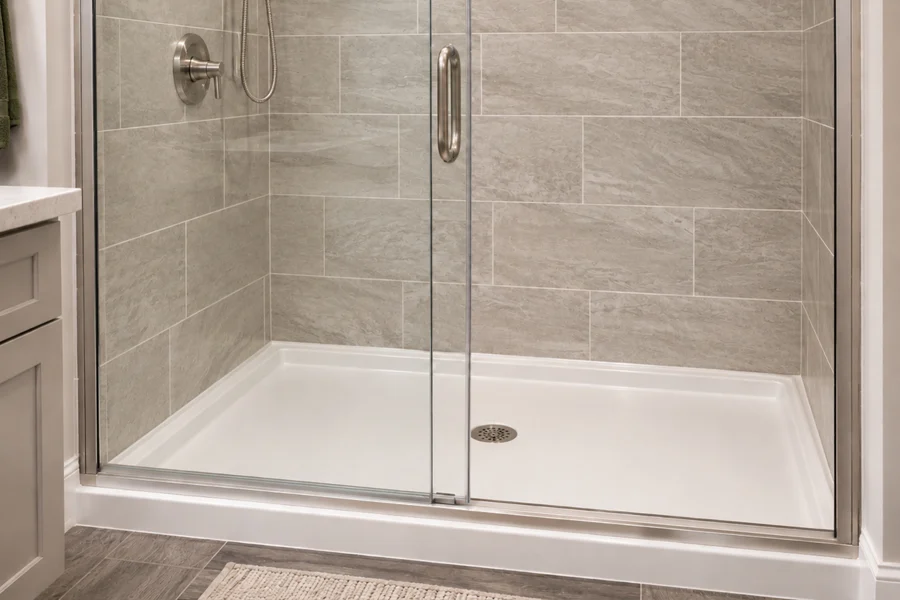
Most shower repair jobs come down to one question: is the problem on the surface, or is water already getting past the waterproofing? A dripping valve, a cracked tile or failed caulk can usually be fixed in an afternoon. A leaking pan or saturated wall behind the tile usually means the shower has to come apart.
Quick answer: Repair the shower when the problem is a worn valve cartridge, failed caulk or grout, a loose door or a few cracked tiles on a sound wall. Replace it when the pan leaks, the floor flexes, tile is loose across large areas, or mold and water damage show up behind the walls or on the ceiling below.
Why Tile and Grout Are Not the Waterproof Layer
Tile and grout shed most of the water, but they are not what keeps it out of your walls and subfloor. Schluter Systems explains that because the tile layer is not waterproof, moisture moves into the setting bed behind it. A properly built shower catches that water with a layer underneath.
- Traditional mortar bed: a sloped pre-bed, a liner (PVC, CPE, copper or lead) clamped into the drain, then a second mortar bed. Water that gets through the grout drains along the liner and out small weep holes in the drain.
- Bonded membrane: a sheet or liquid membrane applied directly under the tile and bonded to the drain flange. These products are tested to ANSI A118.10, the standard for bonded waterproof membranes.
That hidden layer is what decides repair versus replacement. If it is intact, surface problems are cosmetic and fixable. If it has failed, no amount of new grout or caulk will stop the leak.
Which Shower Problems Can Be Repaired?
Dripping Showerhead or Faucet
A shower that keeps dripping after it is turned off usually has a worn cartridge or seals inside the valve. This Old House notes that hard water speeds up cartridge wear, and recommends replacing the cartridge if cleaning does not restore normal flow. The drip is not harmless: the EPA WaterSense program estimates a showerhead leaking 10 drips per minute wastes more than 500 gallons a year.
Temperature Swings or Scalding Bursts
Water that turns hot or cold when someone flushes a toilet points to a failing pressure-balancing cartridge or an older valve without anti-scald protection. Replacing the cartridge often fixes it. If the valve body is corroded or the old valve has no pressure-balance or thermostatic control, the valve itself needs replacement, which means opening the wall behind the trim or through an access panel.
Failed Caulk and Cracked Grout
Caulk at the tub or pan joint, inside corners and around the door frame wears out on its own schedule. Re-caulking is routine maintenance. Cracked or missing grout on a solid wall can be raked out and regrouted. If grout keeps cracking in the same spots, the tile may be moving, which is a sign of a bigger problem. Our guide to cleaning bathroom tiles and grout covers routine care between repairs.
A Few Cracked or Chipped Tiles
Individual tiles can be cut out and replaced if you have matching spares or can find a close match. Tap the surrounding tile first. A hollow sound across a wide area means the tile has lost its bond, and spot repairs will not hold.
Shower Door and Drain Problems
Worn sweeps, seals, rollers and hinges are inexpensive parts on most framed and frameless doors. A slow drain is usually hair and soap buildup, not a failed system. See our post on tempered glass shower enclosures if the door itself needs to be replaced.
When Does a Shower Need Replacement Instead of Repair?
Signs the Shower Pan Is Leaking
Angi lists these warning signs of a failing pan:
- The pan shifts, flexes or feels soft underfoot.
- Cracks in a fiberglass or acrylic pan. Any crack in a plastic pan means it has failed.
- Stains or soft spots on the ceiling below, or water on the floor outside the shower after every use.
- Grout that stays dark long after the shower dries, a sign the mortar bed underneath is saturated.
Angi’s homeowner test: plug the drain, fill the pan with about 2 inches of water, mark the level and check it after 8 hours. A drop in level suggests a leak. For new site-built pans, the International Residential Code requires a flood test with at least 2 inches of water for at least 15 minutes before tile goes down. That inspection step is one reason a correctly rebuilt pan should not leak.
Loose Tile Across Large Areas
When many tiles sound hollow, pop off or shift, the backer board behind them is often wet or deteriorating. Some older homes in Montgomery, Prince George’s and Fairfax counties have showers tiled over standard drywall or green board, which breaks down once it gets wet. These walls usually need to come down to cement board or a foam board with a bonded membrane.
Mold That Keeps Coming Back
The EPA says that if you clean mold without fixing the water problem, the mold will most likely return. Surface mildew on grout is a ventilation and cleaning issue; our post on bathroom ventilation covers fan sizing. Mold that returns within days, a musty smell from the wall, or mold on the drywall outside the shower suggests water is behind the tile. The EPA advises that areas larger than about 10 square feet, or areas with significant water damage, call for professional remediation guidance.
Rotted Subfloor or Framing
A soft floor around the shower, a toilet that rocks nearby, or a sagging ceiling below are all signs of long-term leakage. Once the subfloor or joists are involved, the shower has to be removed to make structural repairs.
How Much Does Shower Repair Cost Compared With Replacement?
These are typical national ranges from published cost guides, not quotes. Prices in the Maryland, Northern Virginia and DC area often run toward the upper end, and the final price depends on what is found once the work starts.
- Valve cartridge replacement: about $200 to $400 installed, according to Angi.
- Full valve replacement: Angi reports a national average around $350, with a wide range of roughly $125 to $1,750 depending on access, valve type and wall repair.
- Minor pan repair (cracks, regrouting) caught early: roughly $30 to $500.
- Shower pan replacement: roughly $530 to $2,700 for the pan alone, before new wall tile.
- Prefab acrylic or fiberglass shower replacement: about $3,000 to $6,000 installed, per This Old House.
- Custom tiled walk-in shower: about $8,500 to $10,000 or more.
- Hidden damage: This Old House lists mold remediation at $500 to $6,000 and subfloor, framing or drywall repair at $1,500 to $5,000 or more.
Repeated repairs on a failing pan add up. If you have regrouted or re-caulked the same leak more than once, a replacement estimate is worth comparing.
Do You Need a Permit for Shower Repair in Maryland, Virginia or DC?
It depends on the work and your jurisdiction. Re-caulking and regrouting do not typically need a permit. Plumbing work is a different matter.
- Fairfax County: the county’s residential plumbing permit page lists replacing or repairing plumbing fixtures as work that requires a permit.
- Montgomery and Prince George’s counties: plumbing permits are handled by WSSC Water, while the county handles building permits for alterations. Montgomery County’s permit guide lists bathroom caulking among jobs that most likely do not need a permit.
- Washington, DC: check with the DC Department of Buildings before moving a valve, drain or wall.
A licensed contractor normally pulls the permits for a shower replacement. Ask who is responsible before work begins.
Repair or Replace: A Quick Decision Checklist
- Repair if the problem is limited to the valve, trim, door hardware, caulk, a few tiles or a slow drain, and there are no signs of water outside the shower.
- Investigate if grout stays dark, mold returns quickly, or a few tiles sound hollow. A moisture meter reading or a pan test can tell you which way to go.
- Replace if the pan moves or cracks, tile is loose across large areas, the ceiling below is stained, or the shower is tiled over drywall.
- Consider upgrading if you are replacing anyway. A rebuilt shower is the time to add a tiled niche, a bench, a modern pressure-balancing valve or a curbless entry, or to finish a tub to shower conversion.
Get the Leak Diagnosed Before You Spend on a Fix
Before you buy grout or a new cartridge, write down what you see: where the water shows up, when it happens (during the shower, or hours later) and whether the floor or ceiling has changed. That record helps a technician separate a valve leak from a pan or wall failure on the first visit.
Our bathroom repair services team handles valve, tile and caulk repairs, and our shower remodeling and bathroom tile installation crews rebuild showers from the studs when repair is no longer practical. You can compare pans, tile and glass at our bathroom showrooms in Annandale, Manassas, Rockville and Bowie, or schedule a shower inspection and estimate at home.
Frequently Asked Questions
Can a Leaking Shower Pan Be Repaired Without Removing the Tile?
Only in limited cases. Small cracks in a solid-surface or acrylic pan and failed grout or caulk at the drain can sometimes be sealed. If the liner under a tiled floor is torn or the pre-slope is missing, the tile floor has to be removed to fix it.
How Do I Know If Water Is Leaking Behind My Shower Wall?
Look for loose or hollow-sounding tile, grout that stays dark long after use, peeling paint or swelling drywall on the other side of the wall, and a musty smell. Stains on a ceiling below the bathroom are a strong sign.
Is It Worth Replacing Just the Shower Valve?
Yes, when the walls and pan are sound. Replacing an old valve with a pressure-balancing or thermostatic model stops drips and temperature swings without remodeling the whole shower.
How Long Should a Tiled Shower Last?
A properly waterproofed tiled shower can last decades. Caulk needs regular renewal, and grout may need sealing or touch-ups, but the waterproof layer underneath should not need replacement if it was built and tested correctly.
Will Homeowners Insurance Cover a Leaking Shower?
Many policies cover sudden water damage but exclude damage from slow, long-term leaks or wear. Read your policy and talk to your insurer before work begins, and photograph the damage before demolition.
Should I Regrout or Recaulk First?
Recaulk first. Failed caulk at the corners and the pan or tub joint is the most common source of small shower leaks, and it is the least expensive fix.