
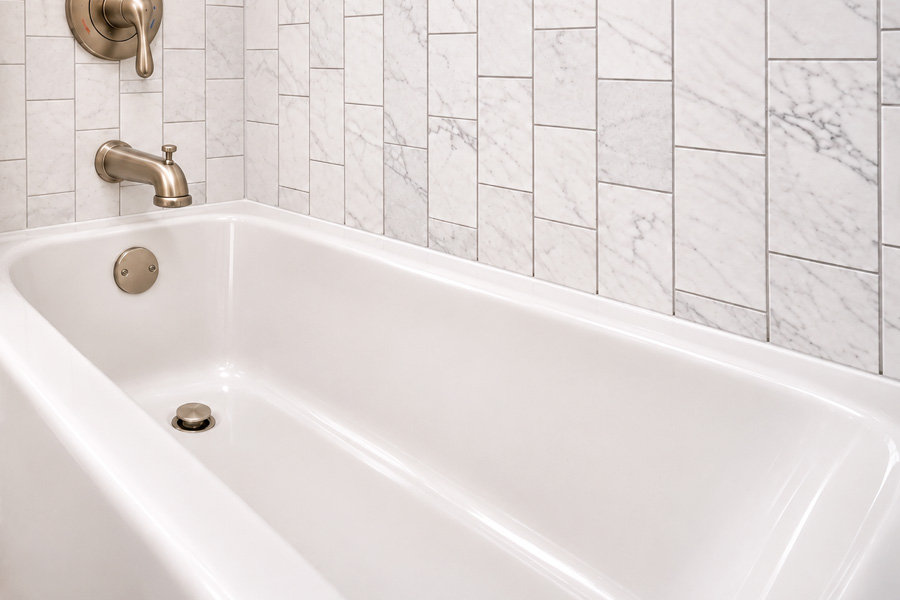
Refinishing gives an old bathtub a new surface. Replacement removes the tub and installs a new one. The right choice depends less on how the tub looks and more on what is wrong with it.
Quick answer: Refinish a tub that is structurally sound but stained, dull or dated, especially cast iron. Replace a tub that leaks, flexes, has rust through the base, sits on damaged framing, or no longer fits how you use the bathroom. Refinishing costs a few hundred dollars and lasts about 10 to 15 years; replacement costs thousands but lasts decades.
What Is the Difference Between Refinishing and Replacing a Bathtub?
Refinishing
Refinishing, also called reglazing or resurfacing, cleans and etches the existing tub, repairs chips, then sprays on a bonding primer and a new topcoat. The tub, drain and surrounding tile stay in place. Most jobs take a day, and the tub is usable after the coating cures.
Replacement
Replacement removes the old tub and installs a new one. In a tiled alcove, that usually means removing the bottom rows of wall tile, updating the drain and overflow, and retiling or installing a new surround. It is the only option that lets you change the tub’s size, style or material, or fix what is underneath it.
Liners
A liner is a custom-molded acrylic or PVC shell installed over the existing tub, often with matching wall panels. It covers the old surface without removing the tub.
When Refinishing Makes Sense
Refinishing is a cosmetic fix. It works well when the problem is the surface, not the tub:
- Stains, dullness or worn glaze that cleaning will not remove
- Small chips that can be filled before coating
- A dated color, such as a 1970s almond or pink tub, in an otherwise solid bathroom
- A cast iron tub in good condition. Cast iron is heavy, rigid and long-lasting, and removing it is labor-intensive. Refinishing preserves a better tub than many modern replacements.
- A short time horizon, such as preparing a house for sale
Cast iron and porcelain-on-steel tubs hold a refinished coating best because they do not flex. Fiberglass and acrylic tubs can be refinished, but the coating tends to wear sooner on a surface that moves underfoot.
When Replacement Is the Better Choice
Replace the tub when a coating would only hide a problem:
- Leaks at the drain, overflow or a crack in the tub body
- Flexing or cracking in a fiberglass or acrylic tub, which often means the support underneath has failed
- Rust through the base of a steel tub
- Soft floors, stains on the ceiling below or a musty smell, all signs of water damage that has to be opened up and repaired
- A tub that has already been refinished and is peeling again
- A layout or safety change, such as a deeper soaking tub, a walk-in tub or a tub-to-shower conversion
- A full bathroom remodel, where the walls and floor are opening up anyway
What About Bathtub Liners?
Liners are faster than replacement and more durable than a sprayed coating, but they have limits. Water can get trapped between the liner and the old tub if the seal fails, and the liner hides any damage underneath rather than fixing it. According to This Old House, many liner companies will not install over fiberglass or acrylic tubs because they flex, and liner systems with wall surrounds can cost as much as a full replacement.
How Much Does Each Option Cost?
These are typical national ranges, not quotes:
- Refinishing: about $335 to $630, with a national average near $480, according to This Old House. Claw-foot and heavily damaged tubs cost more.
- Liner: roughly $1,300 for a tub-only liner, rising to several thousand dollars or more with wall panels.
- Replacement: roughly $2,000 to $9,000, depending on the tub, the plumbing and how much tile or surround has to be redone.
In the Washington, DC area, replacing a tub in a tiled alcove usually lands toward the middle or upper end of that range because of local labor rates and the tile work involved. See our bathtub installation page for what a replacement includes.
How Long Does Each Option Last?
- Professional refinishing: about 10 to 15 years with gentle cleaning. DIY kits typically last only a few years.
- Liners: about 10 to 15 years, as long as the seal holds.
- New acrylic or fiberglass tub: commonly 15 to 30 years, depending on quality and support.
- New cast iron tub: 50 years or more.
A refinished surface generally can’t be refinished over and over. Each new coat adheres less reliably, so a tub that has been reglazed once or twice is often a better candidate for replacement.
Is Bathtub Refinishing Safe?
Professional refinishing uses strong chemicals, so hire an experienced, insured company and plan to stay out of the house while the coating is applied and the room ventilates. Paint strippers containing methylene chloride were linked to worker deaths in bathtub refinishing, and OSHA identified 17 such deaths between 2000 and 2015, according to the American Industrial Hygiene Association. The EPA has since banned the chemical for consumer use and most commercial uses. Ask any refinisher which strippers and coatings they use.
Bathtubs in Maryland, Northern Virginia and DC Homes
Older Homes With Cast Iron Tubs
Many pre-1970 homes in Montgomery County, Arlington and DC still have original cast iron tubs. If the enamel is the only problem, refinishing is usually the better value. If the tub has to come out for a remodel, it is often broken in place because a cast iron tub can weigh 300 pounds or more.
1980s–2000s Fiberglass and Acrylic Tubs
Tract homes and townhouses across Prince George’s, Fairfax and Prince William counties often have one-piece fiberglass tub-shower units. These flex and crack with age, and refinishing rarely lasts on them. Replacement, or converting to a walk-in shower, is usually the longer-term fix.
Condos and Rowhouses
Narrow stairs and building rules can make tub removal harder. Refinishing avoids hauling a tub out, while replacement may require a lighter acrylic tub that fits through the doorway.
Deciding Between Refinishing and Replacing Your Tub
If you are not sure what is wrong with your tub, start with an inspection rather than a quote for either option. We can tell you whether the tub and the floor under it are sound, and whether a new bathtub, a walk-in tub or a shower makes more sense for how you use the room. Compare tub styles and materials at one of our bathroom showrooms in Annandale, Manassas, Rockville or Bowie, or schedule a free in-home estimate.
Frequently Asked Questions
Is It Cheaper to Refinish or Replace a Bathtub?
Refinishing is much cheaper, usually a few hundred dollars compared with several thousand for replacement. It only makes sense if the tub itself is sound.
How Long Does a Refinished Bathtub Last?
A professional refinish typically lasts 10 to 15 years. Harsh cleaners, suction-cup bath mats and standing water shorten its life.
Can Every Bathtub Be Refinished?
Most cast iron, steel, porcelain, fiberglass and acrylic tubs can be refinished. Tubs that leak, crack, flex or have rust through the base should be replaced.
How Do I Know If My Tub Is Cast Iron?
Cast iron tubs are extremely heavy, feel solid when tapped and are magnetic on the underside. Steel tubs are also magnetic but sound hollow and are much lighter.
Should I Refinish My Tub Before Selling My House?
If the tub is stained or dated but otherwise sound, refinishing is an inexpensive way to improve listing photos and buyer impressions.
Can You Refinish a Tub More Than Once?
It is possible, but each new coat bonds less reliably to the old one. After one or two refinishes, replacement is usually the better long-term choice.