Water conservation is more important than ever, and one of the best places to start is your bathroom.
Think about it. Your bathroom uses water every single day. Showers, sinks, toilets, tubs, and even small leaks can all add up quickly. The good news is that a bathroom remodel gives you the perfect chance to make smarter, more water-efficient choices.
Even better? Saving water does not mean giving up comfort or style.
Today’s water-saving bathroom fixtures are sleek, modern, and made to perform well. From low-flow showerheads to efficient toilets and smarter faucet options, there are many ways to create a bathroom that looks beautiful, works better, and uses less water.
If you are planning a bathroom remodel in Maryland, Northern Virginia, or Washington, DC, here are some smart ways to conserve water while creating a space you will love using every day.
Why Water Conservation Matters in Bathroom Remodeling
Bathrooms are one of the biggest water-use areas in the home. That means even small changes can make a big difference over time.
A water-efficient bathroom can help:
- Reduce water waste
- Lower utility bills
- Improve home efficiency
- Support a more eco-friendly lifestyle
- Protect plumbing and fixtures
- Make your remodel more future-friendly
The best part is that water-saving upgrades can be built right into the design. You do not have to choose between a stylish bathroom and a sustainable one. You can have both.
1. Choose Low-Flow Bathroom Fixtures
One of the easiest ways to save water in a bathroom remodel is to choose low-flow fixtures.
Low-flow fixtures are designed to use less water while still giving you the performance you expect. That means your shower can still feel refreshing, your faucet can still rinse well, and your toilet can still flush properly.
Common low-flow bathroom fixtures include:
- Showerheads
- Bathroom faucets
- Toilets
- Tub and shower valves
When shopping for fixtures, look for the WaterSense label. This label helps identify products that meet water-efficiency and performance standards.
For homeowners, this is a simple way to make sure you are choosing fixtures that are designed to save water without feeling weak or frustrating to use.
2. Install a Water-Efficient Showerhead
A long shower can feel amazing. But showers can also use a lot of water, especially if you have an older showerhead.
A water-efficient showerhead can reduce water use while still giving you a comfortable spray. Many modern models use smart spray patterns, pressure-balancing technology, or air-induction features to make the shower feel full while using less water.
Features to consider include:
- Adjustable spray settings
- Pause buttons
- Pressure-compensating flow
- Handheld shower options
- WaterSense-labeled models
A handheld showerhead can also help save water during cleaning, bathing kids, or rinsing the shower walls. It gives you more control, which means less wasted water.
3. Upgrade to a High-Efficiency Toilet
Toilets are one of the biggest water users in the bathroom. If your toilet is older, replacing it can be one of the most effective water-saving upgrades you make.
Modern high-efficiency toilets use far less water than many older models. Many are also designed to flush powerfully, so you do not have to worry about poor performance.
Popular water-saving toilet options include:
- High-efficiency toilets
- Dual-flush toilets
- Pressure-assisted toilets
- WaterSense-labeled toilets
A dual-flush toilet gives you two flush options: a lower-volume flush for liquid waste and a higher-volume flush for solid waste. It is a simple feature, but it can help reduce unnecessary water use every day.
4. Pick Water-Saving Bathroom Faucets
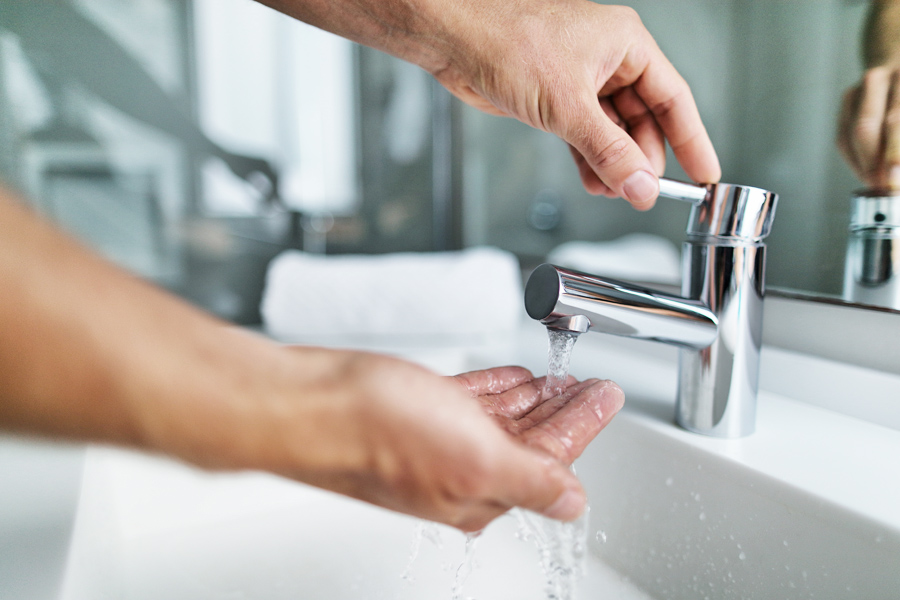
Bathroom faucets may seem small, but they get used all day long. Brushing teeth, washing hands, shaving, rinsing your face, and cleaning the sink all use water.
A water-saving faucet can help cut down on daily water use without changing your routine much at all.
Look for features like:
- Built-in aerators
- WaterSense-labeled faucets
- Single-handle controls
- Touchless or sensor faucets
- Easy-to-clean finishes
Aerators mix air into the water stream. This helps keep the water pressure feeling strong while reducing the amount of water used.
Touchless faucets can also be a good option, especially in busy bathrooms. They turn off automatically, which helps prevent water from running longer than needed.
5. Fix Leaks Before They Waste More Water
A small drip may not seem like a big deal, but leaks can waste a surprising amount of water over time.
During a bathroom remodel, it is smart to check for:
- Leaky faucets
- Running toilets
- Dripping showerheads
- Loose valves
- Damp cabinets
- Water stains
- Soft flooring near plumbing
Fixing leaks early can help protect your bathroom from water damage and reduce waste. It can also prevent bigger repair issues later.
If you are remodeling an older bathroom in Maryland, Northern Virginia, or Washington, DC, this is especially important. Older homes may have aging plumbing, outdated shutoff valves, or fixtures that no longer seal properly.
6. Design the Shower for Better Water Control
A water-saving shower is not just about the showerhead. The design of the shower also matters.
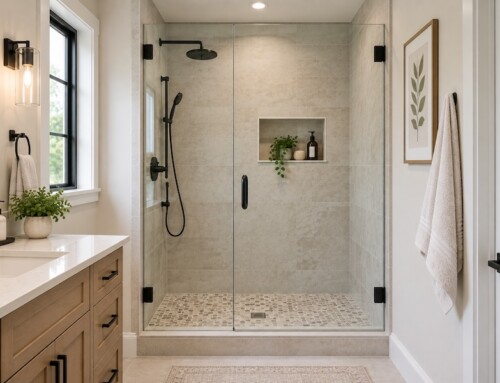
A well-designed shower can help control splashing, reduce runoff, and make daily use easier.
Smart shower design choices include:
- Proper shower door placement
- Good drainage
- Correct shower slope
- Waterproof wall systems
- Built-in niches to reduce clutter
- Handheld showerheads for targeted rinsing
- Quality valves for temperature control
When the shower is designed well, water stays where it belongs. That means less mess, less cleanup, and better long-term performance.
7. Consider a Tankless Water Heater
A tankless water heater heats water as you need it instead of storing hot water in a tank.
For some homes, this can improve energy efficiency and help make hot water delivery more convenient. It may also save space, which can be helpful in smaller homes, condos, or older houses with limited utility areas.
A tankless water heater may be worth considering if you want:
- More efficient hot water use
- A smaller equipment footprint
- Hot water on demand
- Better long-term system performance
This upgrade is not right for every home, so it is important to talk with a professional before making the switch. Plumbing layout, household size, and existing systems all matter.
8. Plan the Bathroom Layout With Efficiency in Mind
The layout of your bathroom can also affect water use.
For example, if your shower, tub, toilet, and vanity are placed in a way that works with existing plumbing, the remodel may be more efficient and less disruptive. If hot water has to travel a long distance from the heater to the bathroom, you may waste water while waiting for it to warm up.
During a remodel, it helps to think about:
- Fixture placement
- Plumbing access
- Drainage
- Hot water delivery
- Shower and tub usage
- Storage for cleaning supplies
- Ventilation and moisture control
A thoughtful layout can make the bathroom easier to use, easier to clean, and more efficient overall.
9. Use Durable, Moisture-Resistant Materials
Water conservation is not only about how much water comes out of the faucet. It is also about protecting your bathroom from water damage.
Durable, moisture-resistant materials help your bathroom last longer and perform better.
Good options may include:
- Porcelain or ceramic tile
- Waterproof wall systems
- Sealed grout
- Quartz vanity tops
- Moisture-resistant cabinetry
- Proper underlayment
- Quality caulking and sealants
When these details are handled correctly, your bathroom is better protected against moisture, mold, mildew, and leaks.
That means fewer repairs, less waste, and a bathroom that holds up better over time.
10. Add Eco-Friendly Bathroom Habits
A water-efficient remodel gives you a great head start, but daily habits still matter.
Simple ways to save water include:
- Taking shorter showers
- Turning off the faucet while brushing your teeth
- Running the fan to control moisture
- Fixing leaks quickly
- Using the right flush option on a dual-flush toilet
- Cleaning fixtures regularly so they perform well
You do not have to be perfect. Small changes, made consistently, can add up.
Water-Saving Bathroom Ideas for Homes in MD, Northern VA, and DC
Homes throughout Maryland, Northern Virginia, and Washington, DC come in many styles and ages. Some have small hall bathrooms. Some have older plumbing. Some have large primary suites ready for a major upgrade.
That is why water-saving bathroom design should not be one-size-fits-all.
Metropolitan Bath & Tile can help homeowners choose bathroom upgrades that fit the space, the home, and the way the bathroom is used. This may include low-flow fixtures, efficient toilets, better shower layouts, updated vanities, moisture-resistant materials, and smart design details that make the bathroom more comfortable.
Whether you are remodeling a bathroom in Maryland, updating a home in Northern Virginia, or improving a bathroom in Washington, DC, water-efficient design can help you create a space that feels beautiful, practical, and built for the future.
Ready to Create a More Water-Efficient Bathroom?
A water-saving bathroom does not have to feel boring or basic.
With the right fixtures, layout, materials, and design choices, you can create a bathroom that uses water wisely and still feels fresh, stylish, and comfortable.
From low-flow showerheads and efficient toilets to better faucets, leak prevention, and durable finishes, every detail can help your bathroom work smarter.
If you are ready to plan a bathroom remodel in Maryland, Northern Virginia, or Washington, DC, Metropolitan Bath & Tile can help you create a space that saves water without sacrificing style.
Frequently Asked Questions
What is the best way to save water in a bathroom remodel?
The best place to start is with water-efficient fixtures. Low-flow showerheads, WaterSense-labeled faucets, and high-efficiency toilets can help reduce water use without changing the way your bathroom looks.
Are low-flow showerheads worth it?
Yes. Modern low-flow showerheads are designed to use less water while still providing a comfortable shower. Many offer strong spray patterns and adjustable settings.
Do dual-flush toilets really save water?
Yes. Dual-flush toilets let you choose between a lower-volume flush and a higher-volume flush, which can reduce unnecessary water use.
What bathroom fixtures save the most water?
Toilets, showerheads, and faucets are usually the best fixtures to upgrade when you want to save water in the bathroom.
Can a water-saving bathroom still look high-end?
Absolutely. Many water-efficient fixtures come in modern finishes and styles, including brushed nickel, matte black, chrome, brass, and polished nickel. You can create a bathroom that is both efficient and beautiful.
Who remodels water-efficient bathrooms in Maryland, Northern Virginia, and Washington, DC?
Metropolitan Bath & Tile helps homeowners in Maryland, Northern Virginia, and Washington, DC design and remodel bathrooms with smart, stylish, and water-conscious features.