Choosing the right vanity surface is one of the most important decisions in a bathroom remodel. Vanity countertops are exposed daily to water, cosmetics, cleaning products, heat tools, and frequent use. The wrong material can stain, scratch, or deteriorate faster than expected.
Two of the most popular choices homeowners consider are marble and quartz. Both offer high-end appeal, but they differ significantly in durability, maintenance, cost, and long-term performance. This guide compares marble vs quartz for bathroom vanity surfaces, helping you make an informed decision based on lifestyle, budget, and design priorities.
Why Vanity Surface Selection Matters in Bathrooms
Bathroom vanities endure a different type of wear compared to kitchen countertops.
Daily Exposure to Moisture and Products
Vanity surfaces are constantly exposed to water splashes, toothpaste, makeup, skincare products, and hair tools. Materials must resist staining, warping, and surface damage over time.
Aesthetic Impact on Bathroom Design
The vanity often acts as a visual focal point. Surface material influences the bathroom’s overall style, whether it’s classic, modern, or spa-inspired.
Marble vs Quartz: What’s the Difference?
Before weighing pros and cons, it’s essential to understand what each material is – and how it’s made.
Marble: A Natural Masterpiece
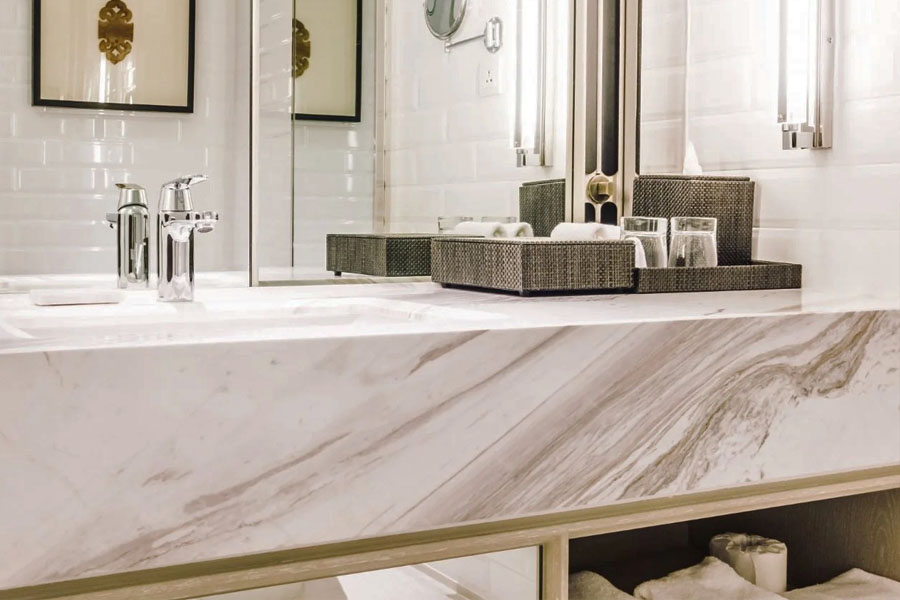
Marble is a natural stone formed over millions of years from limestone exposed to high heat and pressure. Every slab is unique, with veining patterns that create timeless elegance.
- Origin: Quarried from the earth, cut, and polished.
- Look: Luxurious, natural veining and depth of color.
- Composition: 100% natural stone, primarily calcite.
Quartz: A Modern Engineered Solution
Quartz countertops, by contrast, are engineered surfaces – made from approximately 90-95% ground natural quartz crystals combined with resins and pigments.
- Origin: Man-made and consistent in pattern.
- Look: Uniform, modern, and available in countless colors.
- Composition: Engineered stone with binding agents for durability.
In short:
Marble is natural beauty that requires maintenance. Quartz is engineered consistency that prioritizes durability.
Understanding Marble Vanity Surfaces
Marble has been used in bathrooms for centuries and remains a symbol of luxury and timeless design.
Natural Beauty and Unique Veining
Each marble slab is one of a kind, featuring organic veining patterns and color variations. This natural variation is often the main reason homeowners choose marble.
Common Types of Marble Used in Bathrooms
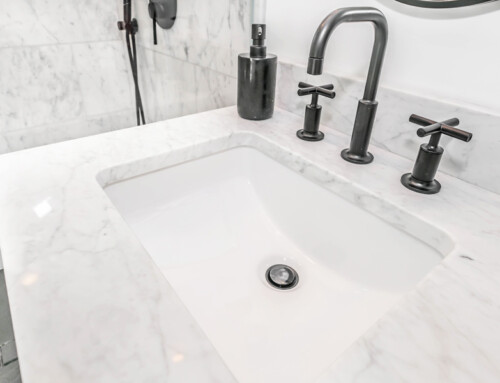
Popular options include Carrara, Calacatta, and Statuario marble. These are typically light-colored with soft veining, making them suitable for bright, elegant bathroom designs.
Pros and Cons of Marble for Bathroom Vanities
Advantages of Marble
- Timeless, high-end appearance
- Naturally cool surface
- Unique slab patterns that add character
- Enhances resale appeal in luxury bathrooms
Limitations of Marble
- Porous surface prone to staining
- Requires sealing and regular maintenance
- Susceptible to etching from acidic products
- Higher risk of visible wear over time
Marble performs best in low-traffic bathrooms or powder rooms where maintenance can be closely managed.
Understanding Quartz Vanity Surfaces
Quartz countertops are engineered surfaces made from natural quartz crystals combined with resins and pigments.
Engineered Consistency
Unlike natural stone, quartz offers consistent patterns and colors. This predictability helps achieve a uniform, modern look across the bathroom.
Design Versatility
Quartz can mimic the appearance of marble while offering enhanced durability. It is available in a wide range of tones, from bright whites to dramatic dark finishes.
Pros and Cons of Quartz for Bathroom Vanities
Advantages of Quartz
- Non-porous and stain-resistant
- Does not require sealing
- Highly durable and scratch-resistant
- Easy to clean and maintain
- Consistent appearance across slabs
Limitations of Quartz
- Less natural variation than marble
- Can be sensitive to excessive heat
- Typically higher upfront cost than some marble options
Quartz is well-suited for primary bathrooms and busy households where durability and ease of maintenance are priorities.
Marble vs Quartz for Bathroom Vanity: Side-by-Side Comparison
Durability
Quartz is more resistant to chips, stains, and scratches. Marble, while strong, is softer and more prone to surface wear.
Maintenance
Marble requires periodic sealing and careful cleaning. Quartz requires minimal upkeep with simple daily cleaning. Quartz wins for low maintenance and superior durability. Marble remains a premium choice for those willing to maintain its natural beauty.
Moisture Resistance
Quartz’s non-porous surface offers superior resistance to moisture-related damage. Marble can absorb moisture if not properly sealed. Quartz offers better protection against humidity and water damage, making it the more hygienic choice for busy households.
Cost Considerations
Costs vary depending on quality and availability, but quartz often provides better long-term value due to lower maintenance requirements. If you prioritize long-term value and durability, quartz offers a better return on investment. For luxury aesthetics and uniqueness, marble justifies its premium.
Visual Appeal
Marble offers unmatched natural elegance. Quartz provides clean, consistent aesthetics with modern flexibility. Choose marble for organic, high-end character. Choose quartz for sleek, consistent beauty with modern flexibility.
Which Vanity Surface Is Right for Your Bathroom?
Choose Marble If
- You prioritize natural beauty and uniqueness
- The bathroom has light usage
- You are comfortable with ongoing maintenance
- You want a classic or luxury design aesthetic
Choose Quartz If
- The vanity will see daily, heavy use
- You want low maintenance and durability
- You prefer a consistent, modern look
- You want long-term performance with minimal upkeep
| Bathroom Style | Best Surface | Why It Works |
| Traditional / Classic | Marble | Adds timeless elegance and organic veining. |
| Modern / Minimalist | Quartz | Offers clean lines and uniform tones. |
| Spa-Inspired | Either | Marble for warmth, Quartz for serenity. |
| Family Bathroom | Quartz | Low maintenance, highly durable. |
| Guest Bathroom | Marble | Luxurious aesthetic with lower daily use. |
Common Mistakes Homeowners Make When Choosing Vanity Surfaces
- Prioritizing Appearance Over Practicality: Ignoring maintenance requirements often leads to disappointment over time.
- Underestimating Daily Wear: Primary bathrooms demand surfaces that can withstand constant use.
- Not Considering Long-Term Costs: Lower upfront costs can lead to higher maintenance expenses later.
Professional Installation and Long-Term Care
Whether you choose marble or quartz, professional installation ensures durability and precision.
Metropolitan Bath & Tile’s experts recommend:
- Seam sealing for moisture protection.
- Professional polishing and leveling.
- Correct substrate preparation to prevent stress cracks.
After installation, adopt routine cleaning protocols and periodic inspections to maintain the surface’s integrity and shine.
Final Thoughts
When deciding between marble vs quartz for bathroom vanity, your choice ultimately depends on priorities:
- Choose marble if you value unmatched natural beauty, luxury, and craftsmanship, and don’t mind a bit of maintenance.
- Choose quartz if you prefer durability, uniformity, and a worry-free surface built for daily use.
Both elevate your bathroom design, but with expert installation from Metropolitan Bath & Tile, you can have confidence that whichever surface you select will perform beautifully for years to come.
Frequently Asked Questions
Which lasts longer, marble or quartz for bathroom vanity?
Both can last decades, but quartz typically outperforms marble due to its engineered durability and resistance to staining.
Can marble be used safely in humid bathrooms?
Yes, if it’s sealed properly and maintained regularly. Avoid standing water and harsh cleaners.
Does quartz look like real marble?
Many modern quartz patterns mimic marble’s veining so well that only experts can distinguish them, offering elegance with less maintenance.
Which is more expensive, marble or quartz?
They’re similar in upfront cost, but quartz is more cost-effective over time due to minimal upkeep.
How do I clean quartz vs marble surfaces?
Use mild soap and water for quartz. For marble, use pH-neutral stone cleaners and reseal periodically.
Is marble or quartz more environmentally friendly?
Both can be sustainable when sourced responsibly. Engineered quartz often incorporates recycled materials, while marble is fully natural and recyclable.