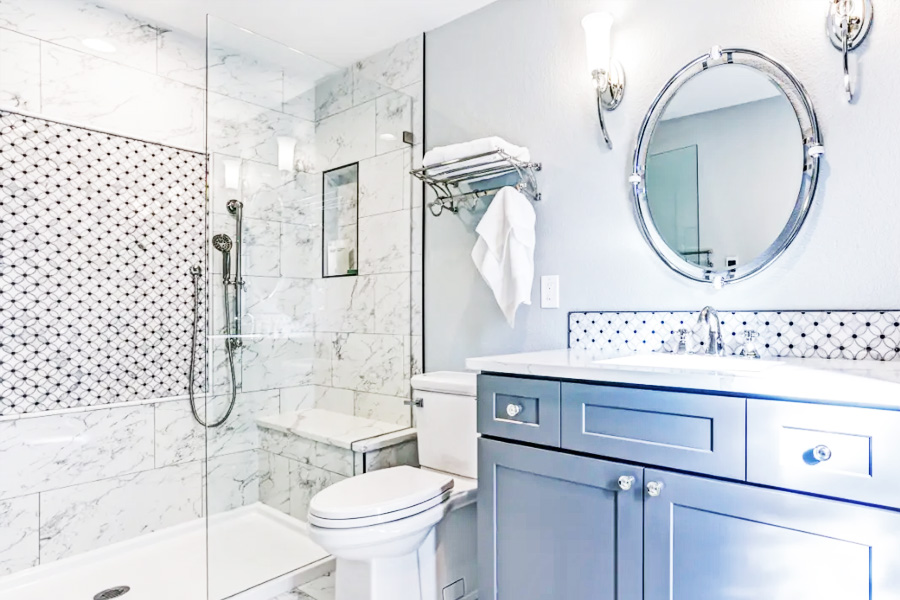
A tub to shower conversion typically involves removing the old tub, rerouting the drain and supply lines, waterproofing the walls and floor, and installing a new pan or curbless base with tile, acrylic, or solid-surface walls.
Most projects take a few days to a week depending on plumbing changes. Cost is driven primarily by whether the drain needs to move and which wall material you choose. It’s a strong option for anyone prioritizing accessibility, easier cleaning, or a more modern look over the option to soak in a tub.
If you’ve been staring at an old bathtub wondering whether it’s worth converting to a walk-in shower, you’re not alone — it’s one of the most common remodeling requests we get. Here’s what actually goes into the decision, the process, and the cost, based on the tub to shower conversions we handle across Maryland, Northern Virginia, and DC.
Why Homeowners Convert a Tub to a Shower
The most common reasons we hear are accessibility, daily convenience, and maintenance. A walk-in shower is easier to step into than climbing over a tub wall, which matters for aging in place or for anyone with mobility concerns — see our accessible bathroom remodeling options if that’s a priority.
Showers are also faster for daily use. Depending on the materials you choose, they can be significantly easier to keep clean than a tub, since there’s less surface area collecting soap scum and grime in hard-to-reach corners.
Resale value is a factor too, but it cuts both ways. In a home with only one bathtub, removing it entirely can actually hurt marketability to buyers with young children. If that’s your situation, it’s worth converting a secondary or guest bathroom rather than your only tub.
Tub to Shower, or Shower to Tub? How to Decide
Most of our conversion requests go in one direction — tub to shower — because most homes already have a tub elsewhere, or the buyer pool for that home doesn’t need one.
Before converting, ask: is this your only bathtub in the house? If yes, and you might sell to a family with young kids down the road, consider converting a secondary bathroom instead and leaving one tub intact.
If this is a secondary bath, or your household doesn’t need a tub, converting to a walk-in shower is usually the right call.
What the Conversion Process Actually Involves
A tub to shower conversion is more than swapping one fixture for another. Here’s what’s typically involved:
- Demolition. The old tub, surround, and any damaged wall material behind it come out first, which often reveals the condition of the framing and plumbing behind the wall.
- Plumbing. The drain typically needs to move from the tub’s location to the new shower pan or base, and supply lines may need adjusting for a new shower valve and showerhead height.
- Waterproofing. Walls need a proper waterproof membrane before tile or another finish goes up, and the shower pan needs to be sloped correctly toward the drain. This is the step that gets skipped by inexperienced installers and causes problems years later.
- Base and walls. You’ll choose between a curbed entry (a low step-over wall) or a curbless, barrier-free entry, which requires more floor framing work but offers the best accessibility.
- Fixtures and glass. Showerheads, valves, niches for storage, and either a glass enclosure or a curtain finish out the space.
What Drives the Cost of a Tub to Shower Conversion
There’s no single number that applies to every bathroom, but these are the factors that move the price up or down the most:
- Whether the drain needs to move. If the new shower footprint doesn’t line up with the existing tub drain, expect additional plumbing labor.
- Curbless vs. curbed entry. A barrier-free, curbless shower requires more floor framing and slope work than a standard curbed pan.
- Wall material. Tile costs more in labor than acrylic or solid-surface panel systems, which install faster but offer fewer design options.
- Glass vs. curtain. A frameless glass enclosure costs more than a shower curtain rod, but it’s a common upgrade homeowners choose for a cleaner look.
- What’s behind the wall. If demolition uncovers water damage, mold, or outdated plumbing that needs to be brought up to code, that adds cost that’s hard to predict before the wall comes down.
For current, specific pricing, our bathroom remodel cost guide breaks down typical ranges, and we provide a detailed, itemized quote before any work begins.
Choosing Your Shower Wall Material
Tile offers the most design flexibility — any color, pattern, or texture — but requires more installation labor and ongoing grout maintenance unless you choose a low-maintenance grout system.
Acrylic and fiberglass surrounds install faster, have no grout lines to clean, and cost less upfront, though they offer fewer customization options than tile.
Solid-surface panel systems sit in between — seamless, low-maintenance, and available in stone-look finishes, without the grout upkeep of true tile.
Accessibility Features Worth Considering
Even if aging in place isn’t your primary reason for converting, it’s worth building in accessibility features now rather than retrofitting later.
A curbless entry, grab bars (properly anchored into blocking, not just drywall), a built-in bench or seat, and a handheld showerhead on a slide bar all add function without making the space feel institutional. Our accessible bathroom remodeling team can build these in from the start.
Common Mistakes to Avoid
The most common issue we see in DIY or lower-quality conversions is inadequate waterproofing. A membrane that’s skipped or installed incorrectly leads to water damage inside the wall that isn’t visible until it’s a much bigger, more expensive problem.
Skipping a proper drain slope is another frequent issue, resulting in standing water in the shower pan. And undersizing the shower without accounting for how you’ll actually move and reach the controls is a comfort issue that’s expensive to fix after the fact.
Working with an experienced bathroom remodeling team avoids all three.
Our Recommendation
If this isn’t your only bathtub, or your household doesn’t need one, converting to a walk-in shower is one of the most reliably worthwhile bathroom updates. It improves daily function, is easier to maintain, and — done correctly, with proper waterproofing — holds up well over time.
If it is your only tub, weigh that trade-off against your resale plans before committing, or consider converting a secondary bathroom instead.
Either way, get the waterproofing and drainage right — that’s what separates a shower that lasts twenty years from one that causes problems in five.
Frequently Asked Questions
How long does a tub to shower conversion take?
Most conversions take a few days to about a week, depending on whether the drain needs to move and how much of the surrounding wall and floor needs rebuilding.
Do I need to move the drain to convert a tub to a shower?
Not always — it depends on where the new shower pan sits relative to the existing tub drain. If the footprint shifts, the drain typically needs to move too.
Is tile or acrylic better for a shower conversion?
Tile offers more design flexibility but costs more in labor and requires grout maintenance. Acrylic and solid-surface systems install faster and need less upkeep, with fewer customization options.
Can I convert my only bathtub to a shower?
You can, but if you might sell to buyers with young children down the road, it’s worth keeping at least one tub in the home — consider converting a secondary bathroom instead.